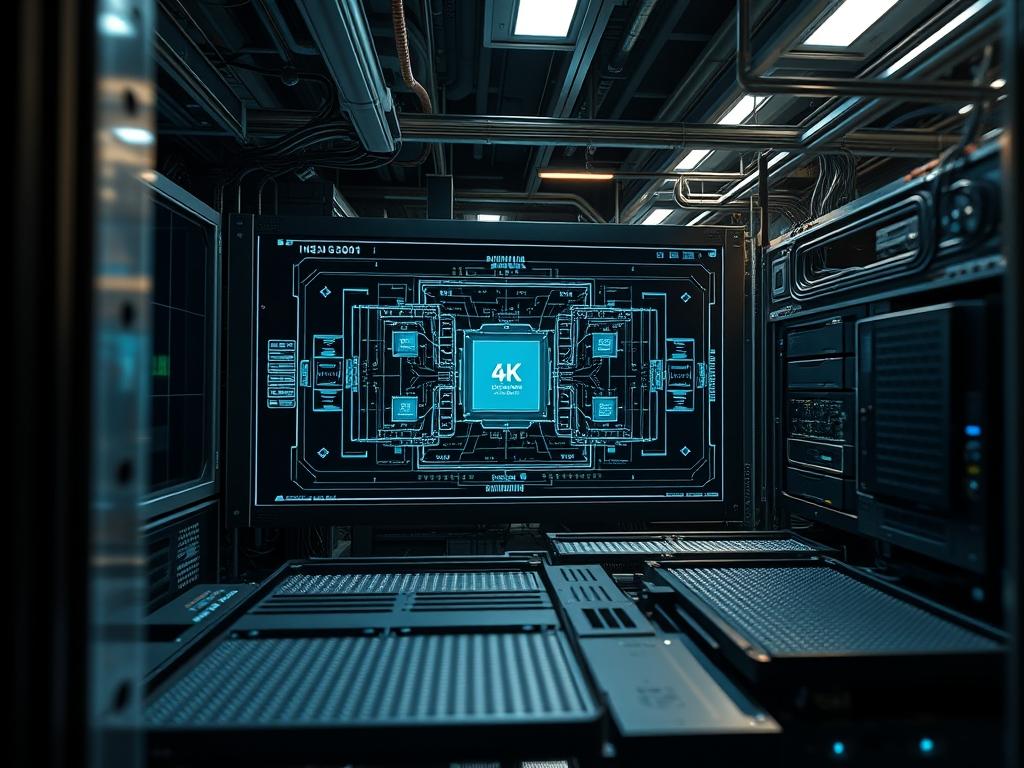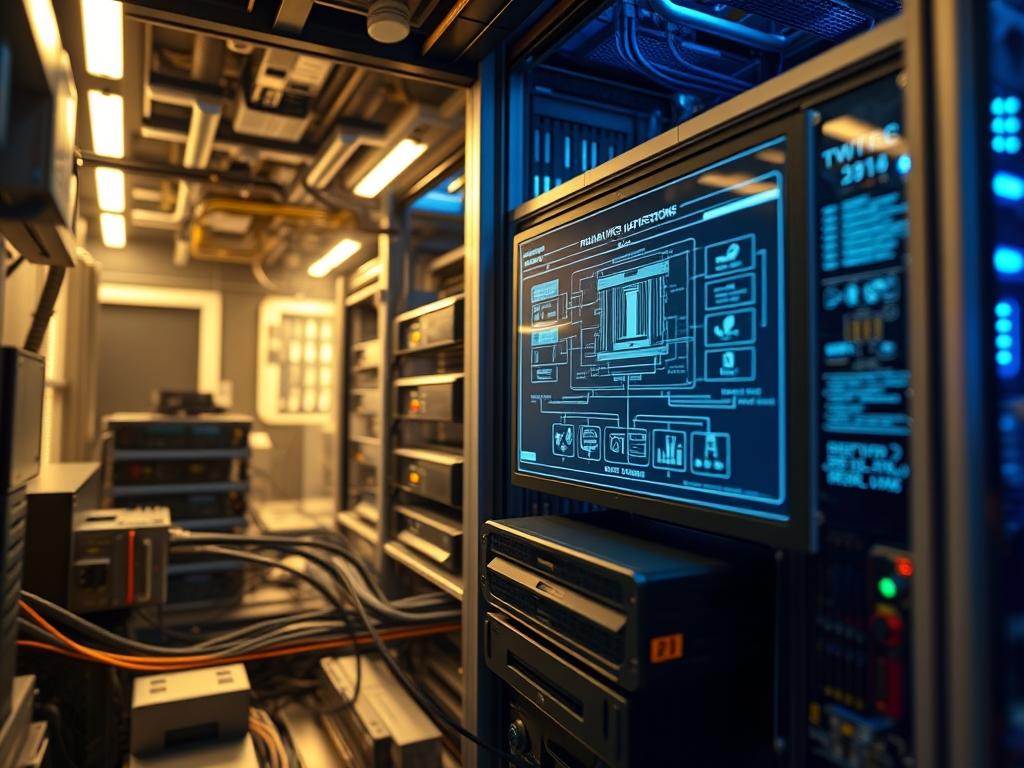
Edge ai vision processing represents the fundamental transition of computational intelligence from centralized cloud environments to the network periphery. In the context of critical water and energy infrastructure, this architecture facilitates real time monitoring and autonomous decision making without the inherent delays of backhaul transmission. By deploying high performance inference engines directly at the sensor ingress, operators can mitigate risks associated with high latency and intermittent connectivity. The primary objective of this technical stack is to convert raw pixel data into actionable metadata packets while minimizing the payload sent to upper level supervisory control and data acquisition (SCADA) systems. This paradigm shift addresses the “bandwidth bottleneck” problem by ensuring that high resolution video remains local; only significant event triggers or calculated object detection metrics are transmitted over the network. Effective deployment requires a rigorous understanding of hardware acceleration, containerization, and the mathematical validation of detection accuracy.
TECHNICAL SPECIFICATIONS
| Requirement | Default Port/Operating Range | Protocol/Standard | Impact Level (1-10) | Recommended Resources |
| :— | :— | :— | :— | :— |
| Inference Engine | Port 8080 / REST API | ONVIF / RTSP | 9 | 8 Core CPU / 16GB RAM / 4GB VRAM |
| Stream Ingestion | Port 554 (RTSP) | H.264 / H.265 | 8 | 1Gbps NIC / Category 6a Cable |
| Telemetry Export | Port 1883 (MQTT) | Sparkplug B / TLS 1.3 | 7 | 128MB Buffer Partition |
| Thermal Management | -20C to +70C | IEEE 802.3bt (PoE++) | 6 | Industrial Grade Heatsink |
| Model Format | N/A | ONNX / TensorRT / OpenVINO | 9 | NVMe Storage (Gen 4) |
THE CONFIGURATION PROTOCOL
Environment Prerequisites:
Successful deployment of an edge ai vision processing node requires a Linux-based environment, specifically Ubuntu 22.04 LTS (Jammy Jellyfish) or a hardened RHEL 9 derivative. The system must possess the NVIDIA Container Toolkit for GPU passthrough or the OpenVINO Runtime for Intel-based VPUs. Necessary user permissions include sudo access for kernel-level configurations and membership in the docker or video groups to interact with hardware acceleration layers. Compliance with IEEE 802.3at/bt is mandatory to ensure the power delivery unit (PDU) can sustain the peak power draw during high concurrency inference tasks.
Section A: Implementation Logic:
The theoretical foundation of this engineering design rests on the principle of encapsulation. By packaging the vision model, its dependencies, and the inference runtime within a container, we achieve an idempotent deployment state. This ensures that the detection results remain consistent across different hardware units. The logic flow involves three distinct stages: pre-processing (scaling and normalization), inference (the forward pass of the neural network), and post-processing (non-maximum suppression and coordinate scaling). We prioritize low thermal-inertia in hardware selection to prevent frequency throttling, which would otherwise lead to erratic latency spikes during peak summer temperatures in uncooled equipment enclosures.
Step-By-Step Execution
Step 1: Kernel Optimization for High Throughput
Execute the command sudo sysctl -w net.core.rmem_max=26214400 to increase the maximum receive buffer size for video packets.
System Note: This modification to the sysctl.conf layer prevents packet-loss at the network interface card (NIC) when receiving high-bitrate 4K streams. Increasing the socket buffer allows the kernel to queue more data before the application processor retrieves it.
Step 2: Provisioning the Container Runtime
Run sudo systemctl enable –now docker followed by sudo systemctl restart docker.
System Note: This command initializes the containerization daemon. It ensures that the edge ai vision processing microservices automatically restart following a power cycle or a system failure, maintaining continuous uptime for critical infrastructure monitoring.
Step 3: Hardware Acceleration Validation
Invoke the utility nvidia-smi or clinfo to verify the presence of the accelerator.
System Note: This step checks the kernel’s ability to communicate with the physical PCI-e or integrated graphics bus. If the output fails to list the device, the inference engine will fallback to the CPU, causing a catastrophic drop in throughput and increased latency.
Step 4: Stream Ingestion and Normalization
Configure the ingestion service using ffmpeg -rtsp_transport tcp -i rtsp://[camera_ip]:554/stream1 -f rawvideo.
System Note: By forcing TCP for the RTSP transport, we eliminate frame corruption caused by UDP packet-loss in electrically noisy industrial environments. The ffmpeg process acts as the primary buffer, decoupling the sensor clock from the inference clock.
Step 5: Inference Model Deployment
Deploy the inference container using docker run –gpu all -v /opt/models:/models vision-engine:latest.
System Note: This command maps the local /opt/models directory to the container environment. It enables the edge ai vision processing unit to load pre-trained weights without rebuilding the image, ensuring rapid model iteration and updates.
Step 6: Telemetry Integration
Establish the telemetry bridge using mosquitto_pub -h [broker_ip] -t vision/detections -m “[json_payload]”.
System Note: This uses the MQTT protocol to send the detection results. The payload is minimal, typically consisting of object classes, confidence scores, and bounding box coordinates, which avoids saturating the narrow outbound bandwidth of 4G/5G edge modems.
Section B: Dependency Fault-Lines:
The primary bottleneck in edge ai vision processing is the memory bandwidth between the system RAM and the VPU/GPU. Library conflicts often arise between the CUDA toolkit and the underlying Linux kernel headers. If the version of python3-opencv is mismatched with the GStreamer plugins, the system may suffer from massive memory leaks, eventually triggering the OOM (Out Of Memory) killer. Furthermore, mechanical bottlenecks frequently occur at the PoE switch layer; if the switch cannot provide sufficient wattage (PoE+ vs PoE++), the camera or the edge node will intermittently reboot during intensive night-vision operations where IR illuminators increase the power load.
THE TROUBLESHOOTING MATRIX
Section C: Logs & Debugging:
When a detection failure occurs, the first point of inspection is the system journal using journalctl -u docker -f. Search for the error string “Resource temporarily unavailable,” which typically indicates a failure to allocate VRAM. Path-specific log analysis should target /var/log/containers/ to identify application-level crashes. If the stream is dropping frames, utilize a fluke-multimeter to verify the voltage drop across the Ethernet run; long cable lengths cause signal-attenuation that disrupts the high-frequency data clock. For model-specific errors, examine the inference logs located within the container at /app/logs/inference.log to check for “NaN” (Not a Number) values in the detection confidence tensors, which indicates a corrupted model weight file.
OPTIMIZATION & HARDENING
Performance Tuning:
To maximize concurrency, configure the inference engine to use batch processing if the latency requirements allow. Setting the OMP_NUM_THREADS variable to match the physical core count prevents context-switching overhead. For thermal efficiency, adjust the fan curve using pwmconfig to trigger active cooling when the junction temperature exceeds 55 Celsius, mitigating the risk of thermal-induced clock degradation.
Security Hardening:
Secure the edge ai vision processing node by implementing strict iptables rules that limit ingress traffic on port 554 and 8080 to authorized internal IPs only. Use chmod 600 on all model weight files and configuration secrets. Ensure the use of TLS 1.3 for all MQTT transmissions to prevent man-in-the-middle attacks where an adversary could spoof detection data to trigger false alarms in the physical security layer.
Scaling Logic:
Scaling this architecture requires a load balancer like HAProxy or Nginx to distribute RTSP streams across multiple edge nodes. As the number of sensors grows, implement a “Cluster Head” logic where one high power node performs heavy re-identification (Re-ID) tasks while lighter edge nodes handle basic object detection. This hierarchical approach maintains system throughput while controlling the total cost of the hardware deployment.
THE ADMIN DESK
Q: Why is the inference latency increasing over time?
A: This is likely due to thermal throttling or a memory leak in the pre-processing buffer. Check the device temperature with sensors and monitor the resident set size (RSS) of the process over a 24-hour period.
Q: How do I recover from a corrupted filesystem on the edge node?
A: Utilize an idempotent configuration management tool like Ansible. Since the vision processing is containerized, you can re-flash the OS and pull the latest image to restore the node to its last known good state.
Q: The camera stream is flickering or showing green artifacts; how fix?
A: This indicates signal-attenuation or insufficient bandwidth. Verify the Category 6a cabling and ensure the bit-rate is set to a constant bit rate (CBR) rather than a variable bit rate (VBR) in the camera settings.
Q: Can I run multiple models on a single GPU?
A: Yes, using Multi-Instance GPU (MIG) on supported hardware or by managing VRAM allocation through the vram_stretch parameter. High concurrency requires careful monitoring of the GPU context-switching times to avoid performance degradation.
Q: What is the best way to move large model updates to remote nodes?
A: Use delta-updates for container layers or a bsdiff-based approach for weight files. This reduces the total payload size, which is critical when operating over low-bandwidth satellite or cellular backhaul connections.