Categories

ai for science compute

AI for Science Compute Requirements and Hardware Metrics

AI for science compute represents the specialized convergence of high performance computing (HPC) and deep learning architectures. Unlike general purpose AI, scientific workloads require extreme floating point precision and the processing of massive datasets derived from sensors, multi-physics simulations, or experimental facilities. This infrastructure operates within a complex technical stack that impacts energy consumption, thermal […]

AI for Science Compute Requirements and Hardware Metrics Read More »
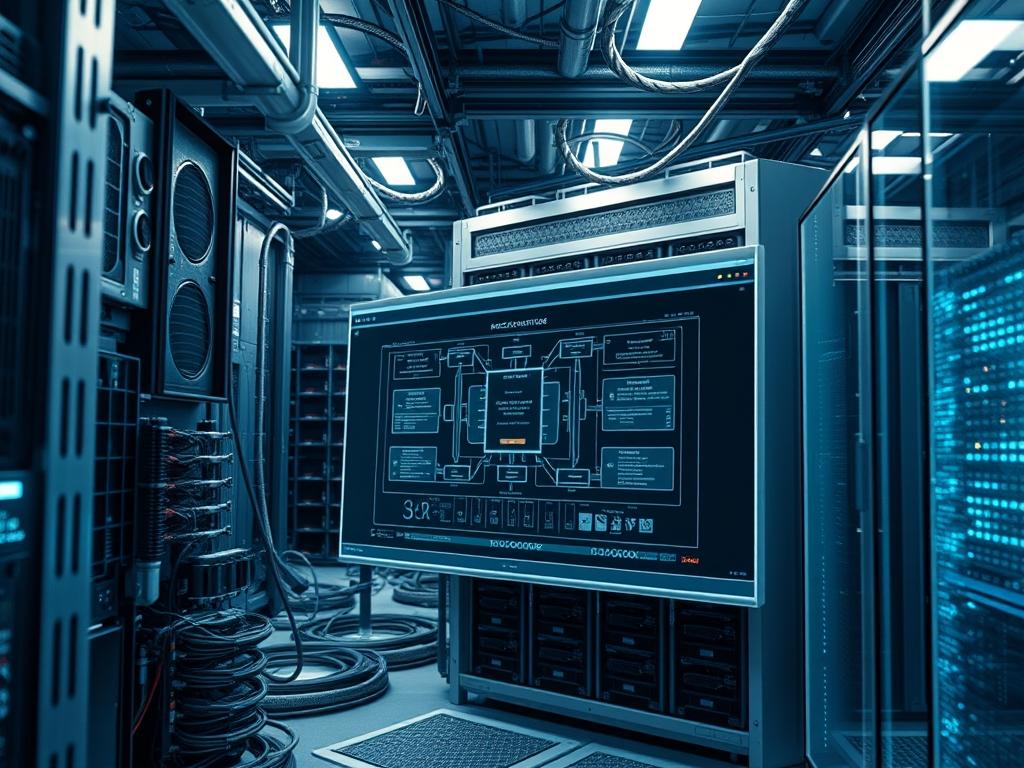
hpc accelerator clusters

HPC Accelerator Clusters and Multi GPU Interconnect Data

High performance computing (HPC) environments have transitioned from general purpose central processing units to specialized hpc accelerator clusters to meet the exponential growth in computational demand. These clusters integrate dense arrays of Graphics Processing Units (GPUs) or Field Programmable Gate Arrays (FPGAs) to handle massive parallelization in workloads such as large language model training; molecular

HPC Accelerator Clusters and Multi GPU Interconnect Data Read More »

high density rack power

High Density Rack Power and Busway Distribution Specs

High density rack power represents the critical intersection of energy infrastructure and compute density. As AI-driven workloads push per-rack requirements beyond 20kW; traditional whip-based power distribution fails to meet the required throughput and flexibility. The transition to high density rack power utilizes modular busway architectures to minimize signal-attenuation in monitoring loops and reduce physical cable

High Density Rack Power and Busway Distribution Specs Read More »

vector processor throughput

Vector Processor Throughput and Mathematical Logic Data

Vector processor throughput represents the fundamental metric for evaluating the efficiency of Single Instruction, Multiple Data (SIMD) architectural implementations within modern high-performance computing (HPC) and cloud-scale data centers. As computational workloads shift toward dense linear algebra; deep learning inference; and high-frequency financial modeling; the bottleneck resides not in scalar clock speed but in the capacity

Vector Processor Throughput and Mathematical Logic Data Read More »

compute node power density

Compute Node Power Density and Rack Wattage Statistics

The effective management of compute node power density remains the primary bottleneck in the evolution of hyperscale data centers and high performance computing (HPC) environments. As modern architectural demands shift toward artificial intelligence and dense GPU clusters, the power envelope of a single rack often exceeds 50kW. This manual addresses the critical intersection of electrical

Compute Node Power Density and Rack Wattage Statistics Read More »

hpc thermal management

HPC Thermal Management and Fluid Dynamics Calculations

High Performance Computing (HPC) thermal management represents the critical intersection of thermodynamics and large-scale computational architecture. As transistor density increases, the thermal-inertia of silicon packages becomes a primary constraint on sustained throughput. Effective thermal management ensures that the heat generated by the payload of billions of simultaneous floating-point operations does not exceed the junction temperature

HPC Thermal Management and Fluid Dynamics Calculations Read More »

gpfs architecture data

GPFS Architecture Data and Distributed Storage Metrics

General Parallel File System (GPFS) architecture data represents the foundational blueprint for high performance storage clusters; it is designed to bypass the traditional bottlenecks of Network Attached Storage by employing a shared-disk model. Within the technical stack of modern energy grids or cloud infrastructure, GPFS functions as the primary data fabric that facilitates massive concurrency

GPFS Architecture Data and Distributed Storage Metrics Read More »

lustre file system specs

Lustre File System Specifications and Metadata Performance

Lustre is a parallel distributed file system designed for high-performance computing (HPC) environments where massive data throughput and metadata concurrency are non-negotiable requirements. In the context of large-scale infrastructure such as energy grid modeling, global water resource simulations, or high-density cloud networks, the lustre file system specs define how effectively thousands of client nodes can

Lustre File System Specifications and Metadata Performance Read More »

parallel file systems

Parallel File Systems and Throughput Consistency Data

Parallel file systems serve as the critical backbone for high throughput computing within global infrastructure sectors such as energy research, weather forecasting, and large scale cloud storage. In these environments, traditional network attached storage solutions fail because they rely on a centralized controller that creates a single point of failure and a significant data bottleneck.

Parallel File Systems and Throughput Consistency Data Read More »

hpc storage tiers

HPC Storage Tiers and Cold Data Archive Statistics

High performance computing environments demand a stratified approach to data management to balance the conflicting requirements of extreme throughput and cost effective persistence. The implementation of hpc storage tiers provides a structural solution to the I/O bottleneck by aligning data placement with the frequency of access and the specific performance characteristics of the underlying hardware

HPC Storage Tiers and Cold Data Archive Statistics Read More »

Scroll to Top